Asharq Bloomberg: Reserves of vital minerals: Economic security or a geopolitical bargaining chip?
Reserves of vital minerals: Economic security or a geopolitical bargaining chip?
February 3, 2026
03:47
Programme: East West
Asharq Bloomberg
Dr. Gavin Harper, a research fellow at the University of Birmingham, said that the Trump administration's move to build a reserve of critical minerals is Read More
February 3, 2026
03:47
Programme: East West
Asharq Bloomberg
Dr. Gavin Harper, a research fellow at the University of Birmingham, said that the Trump administration's move to build a reserve of critical minerals is Read More
Show Comments
BBC Radio Shropshire - Adam Green Morning Show - Lithium Ion Battery Safety in Hot...
First Aired July 17th 2026
On this segment of #ArthursKitchenSchool #Kitchenologist Arthur Zobel discusses the Not-So-Lazy Susan as an option...
On this segment of #ArthursKitchenSchool #Kitchenologist Arthur Zobel discusses the Not-So-Lazy Susan as an option for maximizing corner cabinet space.
Traditional Victorian bathrooms, made beautiful by the detailed layering of mouldings, decorative borders, and wall-to-wall...
Traditional Victorian bathrooms, made beautiful by the detailed layering of mouldings, decorative borders, and wall-to-wall tiling, have always been an inspiration to us- so we created our own range, in traditional tones still loved today.
This is my tea shelf, my own design and my own handy work. 12 caddies...
This is my tea shelf, my own design and my own handy work. 12 caddies and 12 sorts. Note the tin of “Uncle Joe’s Mint Balls” in the middle on the bottom shelf. It’s there as a tribute to Michael Read More
IES Webinar, Towards a circular economy of electric vehicle batteries, Gavin Harper
Mirror of an original video hosted by the Institution of Environmental Sciences: https://www.youtube.com/watch?v=ltSJ7Xd6TRo
Content (C) The IES
With the growing number of electric vehicles on the roads, the question looms - what to do with the batteries when these vehicles reach the Read More
Content (C) The IES
With the growing number of electric vehicles on the roads, the question looms - what to do with the batteries when these vehicles reach the Read More
Which EV Podcast - The EV Battery Recycling Problem
1) Carlos Larrea León
Lead Electrical Engineer at BeePlanet Factory
https://www.linkedin.com/in/carlos-larrea-leon/
2) Gavin Harper
Faraday Institution Research Fellow at University of Birmingham
https://www.linkedin.com/in/gavindjharper/
3) Professor Andrew P Abbott
Professor of Physical Chemistry
https://www2.le.ac.uk/departments/chemistry/people/academic-staff/andrew_p_abbott
https://www.linkedin.com/in/andrew-abbott-1123019a/?originalSubdomain=uk
4) Maria Kelleher
Environmental engineer
https://www.linkedin.com/in/maria-kelleher-2a10496/
The UK has imposed a ban on sales of new internal combustion engines Read More
Betatalk - The Renewable Energy & Low Carbon Heating Podcast - Battery Storage Lithium &...
Gavin Harper
Speaking to "Betatalk"
The Renewable Energy & Low Carbon Heating Podcast
Interviewed by Nathan Gambling
First Aired: May 2, 2020
Battery Storage - Lithium & Sodium
Active buildings, energy storage, lithium ion batteries and strategic materials, it's all here. Listen to podcast friend Dr Read More
Speaking to "Betatalk"
The Renewable Energy & Low Carbon Heating Podcast
Interviewed by Nathan Gambling
First Aired: May 2, 2020
Battery Storage - Lithium & Sodium
Active buildings, energy storage, lithium ion batteries and strategic materials, it's all here. Listen to podcast friend Dr Read More
Physics World Podcast - How can we make lithium-ion batteries more sustainable?
Gavin Harper
Speaking to Physics World Podcast
Interviewed by James Dacey
First Aired: May 3, 2023
Energy Storage & Management Podcasts
"How can we make lithium-ion batteries more sustainable?"
Mirror of original podcast hosted here: https://physicsworld.com/a/how-can-we-make-lithium-ion-batteries-more-sustainable/
Lithium-ion batteries (LIBs) are set to play a key role Read More
Dr. Gavin Harper - Sustainability Ambassadors - July 20, 2022
Mirror of a video hosted by the University of Pennsylvania, Center for the Sustainable Seperation of Metals Visiting Lecture. https://www.youtube.com/watch?v=m3UOjBe9bx8
The Ukraine War and its Impact on Critical Metals Supply
Environment and Climate Change Committee 18/10/23 10:00:00
Environment and Climate Change Committee
Wednesday 18 October 2023 Meeting started at 9.59am, ended 11.34am
09:59:33
Subject: Electric Vehicles
09:59:34
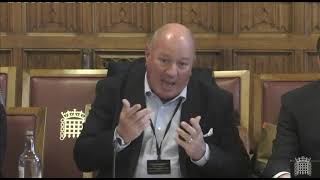
Witness(es): Cory Reynolds, Corporate Affairs and Communications Director, Veolia UK; Ken Byng, Senior Manager, CarTakeBack.com Limited; Robin Brundle, Executive Chairman, Technology Minerals Plc; Dr Gavin Read More
MCC Summit: Advancing the Green Transition in Wartime
A mirror of the following video, produced by The Mathias Corvinus Collegium with English Translation of the Description.
The original video (c) MCC can be found here: https://www.youtube.com/watch?v=FfntmuBRyag
Shaun Riordan highlighted in his contribution that since 2007, crises have hit each other: Read More
The original video (c) MCC can be found here: https://www.youtube.com/watch?v=FfntmuBRyag
Shaun Riordan highlighted in his contribution that since 2007, crises have hit each other: Read More
Gavin Harper, Research Fellow at the Uni of Birmingham, talks the importance of recycling batteries!
A mirror of the video (c) Solar & Storage Live:
Original version hosted here: https://www.youtube.com/watch?v=D5W_5D8virU
Gavin Harper, Met4Tech Research Fellow for University of Birmingham, joins Radiant.Green to discuss how to make the Renewable Energy industry as Renewable as it can be!
0:00 – Read More
Original version hosted here: https://www.youtube.com/watch?v=D5W_5D8virU
Gavin Harper, Met4Tech Research Fellow for University of Birmingham, joins Radiant.Green to discuss how to make the Renewable Energy industry as Renewable as it can be!
0:00 – Read More
ABC Australia Radio National RN Breakfast Broadcast Wed 2 Aug 2023 at 9 35
Gallium and germanium are two elements that don't get mentioned much and most have little idea what they are used for.
But China has just started restricting exports of these materials which are critical for the production of semiconductors found in Read More
Správy RTVS 29/07/2023 19:28
TV appearance on Radio and Television of Slovakian Evening News talking about Lithium Ion Battery Safety
BBC Midlands Today 13/7/2023
Brief clip on BBC Midlands Today about a new battery technology in use in a prototype EV.
Asharq Bloomberg: Reserves of vital minerals: Economic security or a geopolitical bargaining chip?
Reserves of vital minerals: Economic security or a geopolitical bargaining chip?
February 3, 2026
03:47
Programme: East West
Asharq Bloomberg
Dr. Gavin Harper, a research fellow at the University of Birmingham, said that the Trump administration's move to build a reserve of critical minerals is aimed at protecting the US economy from supply chain disruptions and geopolitical volatility, noting that the market alone has failed to ensure the security of these materials, and that the strategic stockpile is a tool to address this.
احتياطي المعادن الحيوية.. أمن اقتصادي أم ورقة ضغط جيوسياسية؟
03 فبراير 2026
03:47
اقتصاد
شرق غرب
قال د. جافين هاربر زميل الباحث في جامعة برمنجهام إن توجه إدارة ترمب لبناء احتياطي من المعادن الحيوية يهدف إلى حماية الاقتصاد الأميركي من اضطرابات سلاسل الإمداد والتقلبات الجيوسياسية، مشيرًا إلى أن السوق وحده فشل في ضمان أمن هذه المواد، وأن المخزون الاستراتيجي يمثل أداة لمعالجة هذا الخلل ضمن حزمة أوسع من الإجراءات.
BBC Radio Shropshire - Adam Green Morning Show - Lithium Ion Battery Safety in Hot...
First Aired July 17th 2026
On this segment of #ArthursKitchenSchool #Kitchenologist Arthur Zobel discusses the Not-So-Lazy Susan as an option...
On this segment of #ArthursKitchenSchool #Kitchenologist Arthur Zobel discusses the Not-So-Lazy Susan as an option for maximizing corner cabinet space.
Traditional Victorian bathrooms, made beautiful by the detailed layering of mouldings, decorative borders, and wall-to-wall...
Traditional Victorian bathrooms, made beautiful by the detailed layering of mouldings, decorative borders, and wall-to-wall tiling, have always been an inspiration to us- so we created our own range, in traditional tones still loved today.
This is my tea shelf, my own design and my own handy work. 12 caddies...
This is my tea shelf, my own design and my own handy work. 12 caddies and 12 sorts. Note the tin of “Uncle Joe’s Mint Balls” in the middle on the bottom shelf. It’s there as a tribute to Michael Harding and his very funny song by the same name.
IES Webinar, Towards a circular economy of electric vehicle batteries, Gavin Harper
Mirror of an original video hosted by the Institution of Environmental Sciences: https://www.youtube.com/watch?v=ltSJ7Xd6TRo
Content (C) The IES
With the growing number of electric vehicles on the roads, the question looms - what to do with the batteries when these vehicles reach the end of life? This webinar explored the pathways to a circular economy of electric vehicle batteries, considering the reuse and recycling of lithium-ion batteries, different pathways for lithium-ion battery recycling and future directions for improving the processes used to treat electric vehicle batteries at the end of life as volumes of batteries needing to be recycled start to grow in the future.
The webinar drew on the work being undertaken at the University of Birmingham’s Centre for Strategic Elements & Critical Materials by the Faraday Institution’s ReLiB project, the UKRI Interdisciplinary Centre for the Circular Economy of Technology Metals and the EPSRC TReFCo (Thermal Recovery of Functional Coatings) projects.IES Webinar - Towards a circular economy of electric vehicle batteries
Which EV Podcast - The EV Battery Recycling Problem
1) Carlos Larrea León
Lead Electrical Engineer at BeePlanet Factory
https://www.linkedin.com/in/carlos-larrea-leon/
2) Gavin Harper
Faraday Institution Research Fellow at University of Birmingham
https://www.linkedin.com/in/gavindjharper/
3) Professor Andrew P Abbott
Professor of Physical Chemistry
https://www2.le.ac.uk/departments/chemistry/people/academic-staff/andrew_p_abbott
https://www.linkedin.com/in/andrew-abbott-1123019a/?originalSubdomain=uk
4) Maria Kelleher
Environmental engineer
https://www.linkedin.com/in/maria-kelleher-2a10496/
The UK has imposed a ban on sales of new internal combustion engines from 2030 as part of the plan to achieve net zero greenhouse emissions, which means that in the future we will see a lot of more electric vehicles on the road. In this podcast special, we explore how the batteries in electric vehicles do not last forever, and do have an ‘expiration date’ when the decay process starts. We ask what happens to these batteries once they are at the end of their lives? Gian Matteo Sacchetti reports on the challenges of recycling Lithium-Ion batteries.
Also available via your favourite podasting platform, including Apple Podcasts, Spotify, Google Podcasts, and TuneIn.
Music by Soonripe Collective.
Mirror of an original podcast here: https://www.whichev.net/2020/12/11/the-ev-battery-recycling-problem-whichev-podcast-special-episode-18/
Betatalk - The Renewable Energy & Low Carbon Heating Podcast - Battery Storage Lithium &...
Gavin Harper
Speaking to "Betatalk"
The Renewable Energy & Low Carbon Heating Podcast
Interviewed by Nathan Gambling
First Aired: May 2, 2020
Battery Storage - Lithium & Sodium
Active buildings, energy storage, lithium ion batteries and strategic materials, it's all here. Listen to podcast friend Dr Gavin Harper a Faraday Institution Research Fellow School of Physics and Astronomy at Birmingham University chat with Dr Jen Baker from SPECIFIC at the University of Swansea about sustainability and second life batteries. Also joining Nathan is the MD for the ACEON Group, a battery manufacturer involved in developing the MCS standards for battery installation
A mirror of an original podcast hosted here: https://betatalk.buzzsprout.com/509671/3590353
Physics World Podcast - How can we make lithium-ion batteries more sustainable?
Gavin Harper
Speaking to Physics World Podcast
Interviewed by James Dacey
First Aired: May 3, 2023
Energy Storage & Management Podcasts
"How can we make lithium-ion batteries more sustainable?"
Mirror of original podcast hosted here: https://physicsworld.com/a/how-can-we-make-lithium-ion-batteries-more-sustainable/
Lithium-ion batteries (LIBs) are set to play a key role in the transition to a decarbonized world. They are one of the principal energy sources for electric vehicles, grid storage and many consumer electronics. As things stand, however, the way that we produce and manage LIBs over their life cycles is far from perfect – bringing environmental, economic and geopolitical concerns. In the latest episode of the Physics World Stories podcast, Andrew Glester looks at how we can make LIBs more sustainable, with a focus on activities in the UK.
The first guest is Gavin Harper, a metallurgy researcher at the University of Birmingham, a lead author on a recent LIB roadmap article in JPhys Energy. Harper talks about opportunities for improving LIB waste management and creating circular economies. For instance, batteries can be designed to make it far easier to reuse constituent parts, while smart grids can enable consumers to trade energy between electric cars, houses, and the grid. Harper tackles the big question: is it more environmentally friendly to own an electric car, rather than a conventional fossil fuel-powered vehicle, if you consider the full life cycle?
Local lithium supplies
Some of the most contentious issues with LIBs relate to lithium mining. Roughly 60% of known lithium reserves are located within the salt flats of Latin America, mostly within the “lithium triangle” of Bolivia, Argentina and Chile. The vast amounts of water needed for extracting lithium from brine deposits can lead to water scarcity, pollution of local soils and water, and disruption of local ecosystems. Meanwhile, China has surged ahead of the world in its capacity for manufacturing LIBs, with Western nations now keen to build up their own knowledge bases and search for local lithium deposits.
One intriguing possibility in the UK is to extract lithium directly from geothermal waters near the coast of Cornwall. Ali Salisbury, an exploration geologist at Cornish Lithium, joins the podcast to explain how Cornwall’s unique geology – lying on top of a large, fractured mass of granite containing lithium-rich minerals – is enabling this possibility. Cornish Lithium says the method could have minimal environmental impacts, and the company is also investigating more sustainable forms of hard-rock lithium mining in the same region.
Dr. Gavin Harper - Sustainability Ambassadors - July 20, 2022
Mirror of a video hosted by the University of Pennsylvania, Center for the Sustainable Seperation of Metals Visiting Lecture. https://www.youtube.com/watch?v=m3UOjBe9bx8
The Ukraine War and its Impact on Critical Metals Supply
Environment and Climate Change Committee 18/10/23 10:00:00
Environment and Climate Change Committee
Wednesday 18 October 2023 Meeting started at 9.59am, ended 11.34am
09:59:33
Subject: Electric Vehicles
09:59:34
Witness(es): Cory Reynolds, Corporate Affairs and Communications Director, Veolia UK; Ken Byng, Senior Manager, CarTakeBack.com Limited; Robin Brundle, Executive Chairman, Technology Minerals Plc; Dr Gavin Harper, Research Fellow, Faraday Institution, University of Birmingham
Channel:
14
House:
Lords
Location:
Committee room 4
Event Type:
Select committee
Production:
Automated Camera System
MCC Summit: Advancing the Green Transition in Wartime
A mirror of the following video, produced by The Mathias Corvinus Collegium with English Translation of the Description.
The original video (c) MCC can be found here: https://www.youtube.com/watch?v=FfntmuBRyag
Shaun Riordan highlighted in his contribution that since 2007, crises have hit each other: financial crisis, migration, COVID, war, and the future does not promise that we are facing calm years. That is why, according to the director of the Department of Diplomacy and Cyberspace of the European Institute of International Studies, it is necessary to go green in a crisis environment.
Reacting to Riordan's words, Stefan Sipka said that radical change is needed in this area because climate change is a breeding ground for further crises. The political analyst of the European Policy Center cited (climate) migration as an example. However, according to him, the current energy crisis can more effectively promote the wider spread of renewable and climate-friendly energy.
Related to this, Emmet Penney explained that now – as a result of the impact of war and sanctions on prices – people themselves have been forced to save. However, the editor-in-chief of Grid Brief drew attention to the fact that we cannot talk about a green transition as long as it is only implemented in North America and Europe, but with these countries installing coal-based power plants and polluting industries in developing countries.
At the same time, the director of the Climate Policy Institute operating in the MCC drew attention to the fact that the process is hindered by the fact that what constitutes green energy and how to implement the green revolution is determined on a political and ideological basis, rather than a professional one. Máté Litkei said that there is a serious debate in the European Union as to whether, for example, nuclear energy is classified as climate-friendly or green energy.
According to a researcher at the University of Birmingham, the green transition, the wider installation of new, renewable energy-based power plants, also creates jobs, which is an important aspect in times of crisis. At the same time, the current crisis has highlighted the fact that Western countries do not have the energy carriers (gas, coal) and raw materials (uranium, lithium) that are necessary for the production of energy (including renewable energy). These have to be imported, so the countries have become vulnerable, pointed out Dr. Gavin D. J. Harper.
Read more:
https://mcc.hu/hir/komoly-megprobalta...
---------------
Shaun Riordan hozzászólásában rávilágított, 2007 óta egymást érik a válságok: pénzügyi válság, migráció, COVID, háború és a jövő sem kecsegtet azzal, hogy nyugodt évek előtt állunk. Éppen ezért az Európai Nemzetközi Tanulmányok Intézetének Diplomáciai és Kibertérrel foglalkozó tanszékének igazgatója szerint válságos környezetben szükséges meglépni a zöld fordulatot.
Riordan mondataira reagálva Stefan Sipka elmondta, azért kell gyökeres változás ezen a téren, mert a klímaváltozás további válságok melegágya. Az Európai Politikai Központ politikai elemzője példaként említette a (klíma)migrációt. Szerinte ugyanakkor a mostani energiaválság hatékonyabban előmozdíthatja a megújuló és klímabarát energia szélesebb körű térnyerését.
Ehhez kapcsolódóan Emmet Penney kifejtette, most – a háború és szankciók árakra gyakorolt hatása következtében – az emberek maguk is rákényszerültek a takarékosságra. Mindazonáltal a Grid Brief főszerkesztője arra hívta fel a figyelmet, hogy addig nem beszélhetünk zöld átmenetről, ameddig ezt csak Észak-Amerikában és Európában valósítjuk meg, de úgy, hogy ezek az országok a fejlődő országokba telepítenek szénbázisú erőműveket és környezetszennyező iparágakat.
Az MCC-ben működő Klímapolitikai Intézet igazgatója ugyanakkor arra hívta fel a figyelmet, hogy hátráltatja a folyamatot, hogy nem szakmai, hanem politikai és ideológiai alapon határozzák meg, mi minősül például zöld energiának és hogyan kell végrehajtani a zöld fordulatot. Litkei Máté elmondta, komoly vita van az Európai Unióban, hogy például az atomenergia klímabarát vagy zöld energiának minősül-e.
A Birminghami Egyetem kutatói munkatársa szerint a zöld átmenet, az új, megújuló energiára épülő erőművek szélesebb körű telepítése munkahelyeket is teremt, amely fontos szempont válság idején. A mostani krízis ugyanakkor arra világított rá, hogy a nyugati országok nem rendelkeznek azokkal az energiahordozókkal (gáz, szén) és nyersanyagokkal (urán, lítium), amelyek energia (legyen szó megújuló energiáról is) előállításához szükségesek. Ezeket importálni kell, így az országok kiszolgáltatottak lettek – emelte ki Dr. Gavin D. J. Harper.
Bővebben:
https://mcc.hu/hir/komoly-megprobalta...
Gavin Harper, Research Fellow at the Uni of Birmingham, talks the importance of recycling batteries!
A mirror of the video (c) Solar & Storage Live:
Original version hosted here: https://www.youtube.com/watch?v=D5W_5D8virU
Gavin Harper, Met4Tech Research Fellow for University of Birmingham, joins Radiant.Green to discuss how to make the Renewable Energy industry as Renewable as it can be!
0:00 – Introduction
0:17 – Speaking position at Solar and Storage Live
0:40 – Research at the University of Birmingham
1:30 – Making the Renewable Energy industry as Renewable as it can be
2:48 - Panel discussion
4:10 - The importance of Standardisation
5:05 - Unlocking mass EV uptake
📩 Subscribe to Radiant.Green's Newsletter,
📈 Follow Solar and Storage Live on LinkedIn,
/ solar-storage-live .
ABC Australia Radio National RN Breakfast Broadcast Wed 2 Aug 2023 at 9 35
Gallium and germanium are two elements that don't get mentioned much and most have little idea what they are used for.
But China has just started restricting exports of these materials which are critical for the production of semiconductors found in devices such as smartphones, laptops and cars.
Guest: Dr Gavin Harper, Research Fellow with the University of Birmingham's Centre for Strategic Elements and Critical Materials
Producer:
David Cook
Broadcast 3 Aug 2023, 6.35AM Australian Eastern Standard Time
https://www.abc.net.au/radionational/programs/breakfast/china-imposes-export-controls-on-germanium-and-gallium/102682054
Správy RTVS 29/07/2023 19:28
TV appearance on Radio and Television of Slovakian Evening News talking about Lithium Ion Battery Safety
BBC Midlands Today 13/7/2023
Brief clip on BBC Midlands Today about a new battery technology in use in a prototype EV.