


◆STEM · Exhibits
Exhibits & Demonstrations
Making science visible: the exhibits, demonstrations and physical things that make an idea click. The ones I’ve helped build, and the ones I go out of my way to see.

◆Projects
Things I’ve helped make
2024Xplore!, Wrexham · Royal Cornwall Museum, Truro · Eden Project, Cornwall
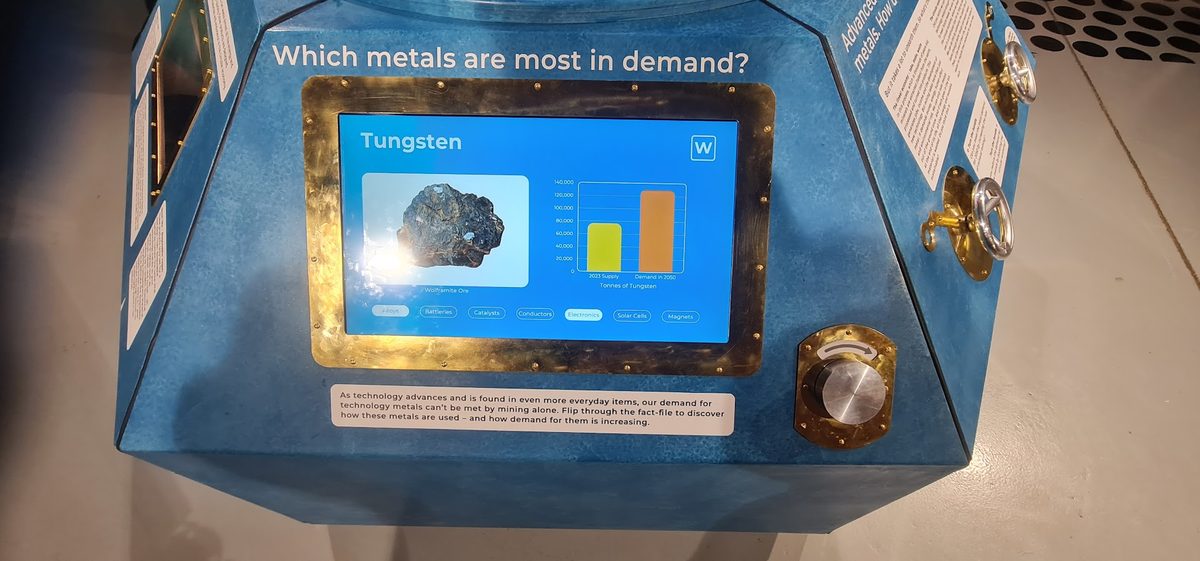
The New Precious Metals
A 3.5-metre interactive. Visitors try to meet rising demand for lithium, tin and cobalt, either by opening new mines or by repairing, refurbishing and recycling what has already been dug up.
My partPart of the Met4Tech team that produced the research underpinning the exhibit, as a Co-Investigator at the University of Birmingham. I also ran the science-engagement workshop at its Xplore! launch.
Exhibit by the Met4Tech team.
2017–2018Tyseley Energy Park · Energy Capital, West Midlands
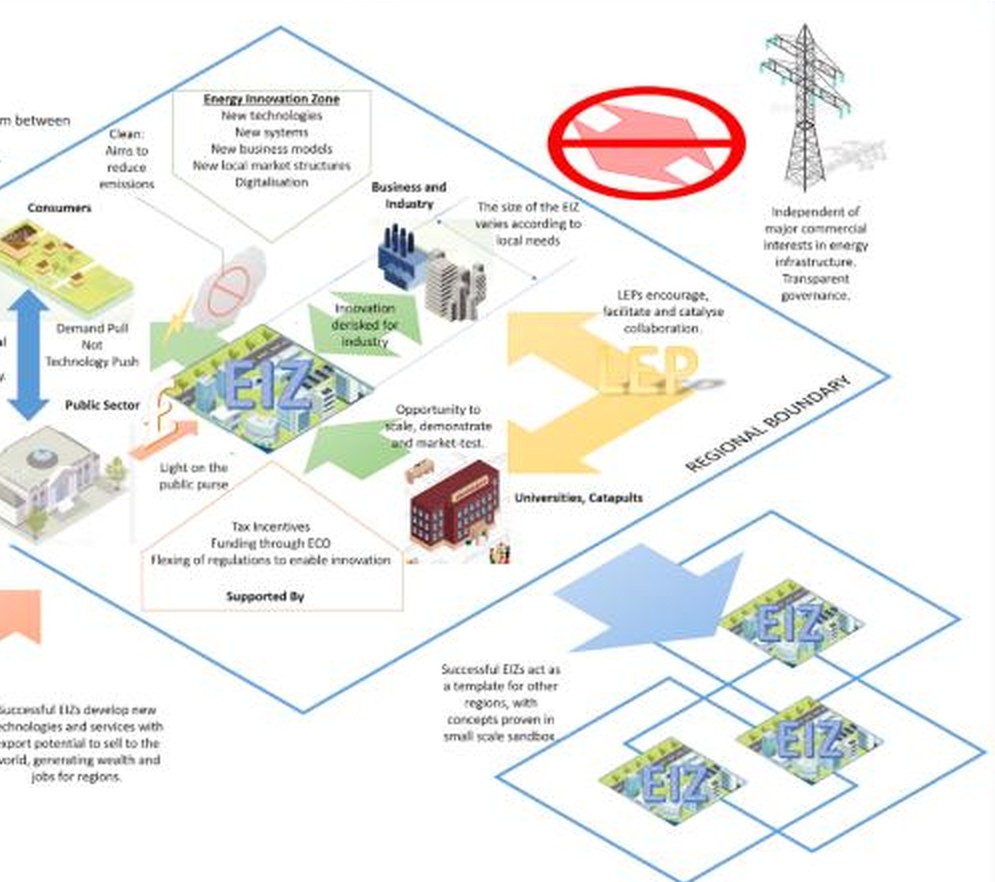
Energy Innovation Zone diagrams, Powering West Midlands Growth
A set of double-page isometric diagrams, one for each proposed Energy Innovation Zone, so a reader could take in a whole energy district at once. The Tyseley Energy Park drawing set the style for the others.
My partI drew the original concept for the Tyseley Energy Park diagram in PowerPoint (it existed by March 2017). Later, as Policy Commission Manager, I specified the report's diagram set and drew the concept for the generic Energy Innovation Zone graphic.
Concepts neatened up and drawn for print by Creative Media, University of Birmingham.
March 2017Birmingham
Birmingham Energy Institute stand, UK–Qatar Business & Investment Forum
A screen enclosure running the Clean Cold animation in English and Arabic, an illuminated Energy Capital graphic, a Highview Power plinth, and the Dearman engine on its own plinth.
My partDesigned and organised the University's stand with about a month's notice, while the organisers were slow to confirm the space. I pushed for pieces that pack down and travel to the next event rather than going in a skip.
Screen enclosure built by Innovision; graphics by Creative Media, University of Birmingham.
2009BBC One · The Open University
Human Power Station, Bang Goes the Theory
Eighty bicycle-powered generators connected to a family home, for a BBC One special made with The Open University.
My partConsultant to Electric Pedals. I worked with Colin Tonks and Tim Siddall, who built bicycle generators to power DC installations, to design the interface between eighty bikes and a family home: live feedback telling the riders how hard to pedal, and power that was near-instantaneous rather than charged into a store. The key step was a small bank of supercapacitors on the DC side. It gave the group just enough buffer to respond while an islanded inverter supplied the house.
Built with Colin Tonks and Tim Siddall; Electric Pedals for BBC One and The Open University.
◆On my travels
Places that taught me
When I travel, I make time for science museums and discovery centres. The map shows the ones I’ve visited so far.
Science Museum
The Harvard Museum of Natural History
MIT Museum
Museum of Science
Powerhouse Ultimo
Science and Industry Museum
Griffin Museum of Science and Industry
Mines Museum of Earth Science
Lapworth Museum of Geology
Corning Museum of Glass
German Museum of Technology
Life Science Centre
National Space Centre
Techniquest
Xplore! Science Discovery Centre
Technopolis
Scienceworks (Museums Victoria)
Centre for Alternative Technology
Eden Project
Pure Energy Centre
Stratford City Energy Centre - Bring Energy
Sustainable Building Center
SPECIFIC, Swansea University Bay Campus


23 museums, science centres and energy sites in five countries on three continents
I look for exhibits that survive a school party, explain without a wall of text, and tell the story of energy and materials honestly. I also look at how they’re built: the best pieces can be taken down, moved and used again.
These are some of the exhibits that stayed with me.
Energy you can stand next to
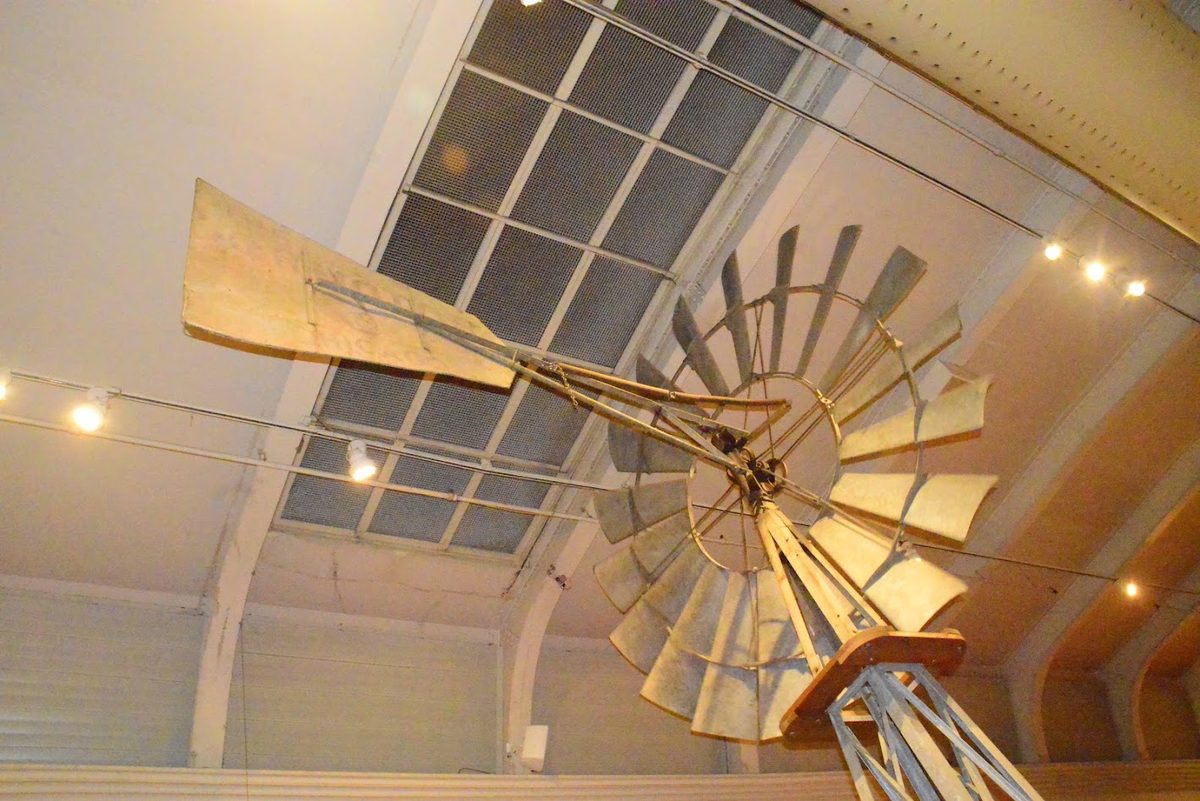
The Henry Ford, DearbornA full-size windmill hung overhead, so visitors look up at the machine itself.
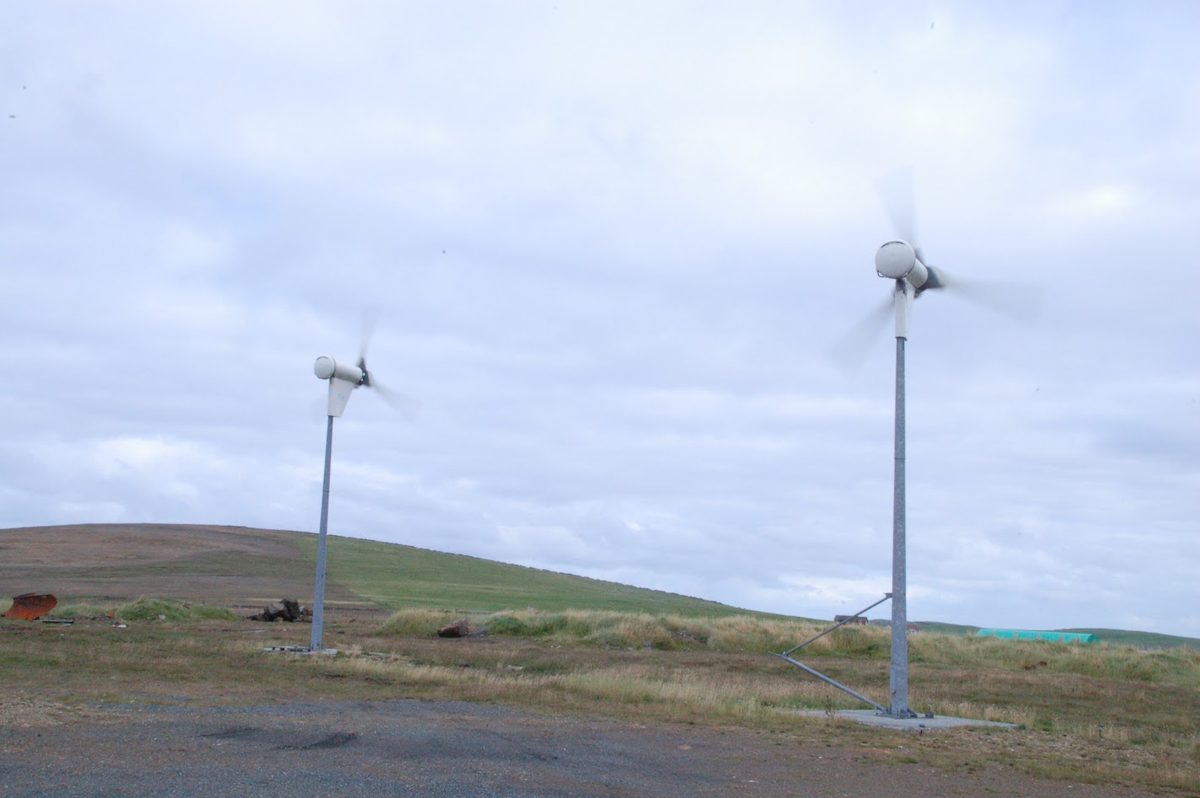
PURE Energy Centre, ShetlandSmall wind turbines on the hill: the power source in plain sight of the plant.
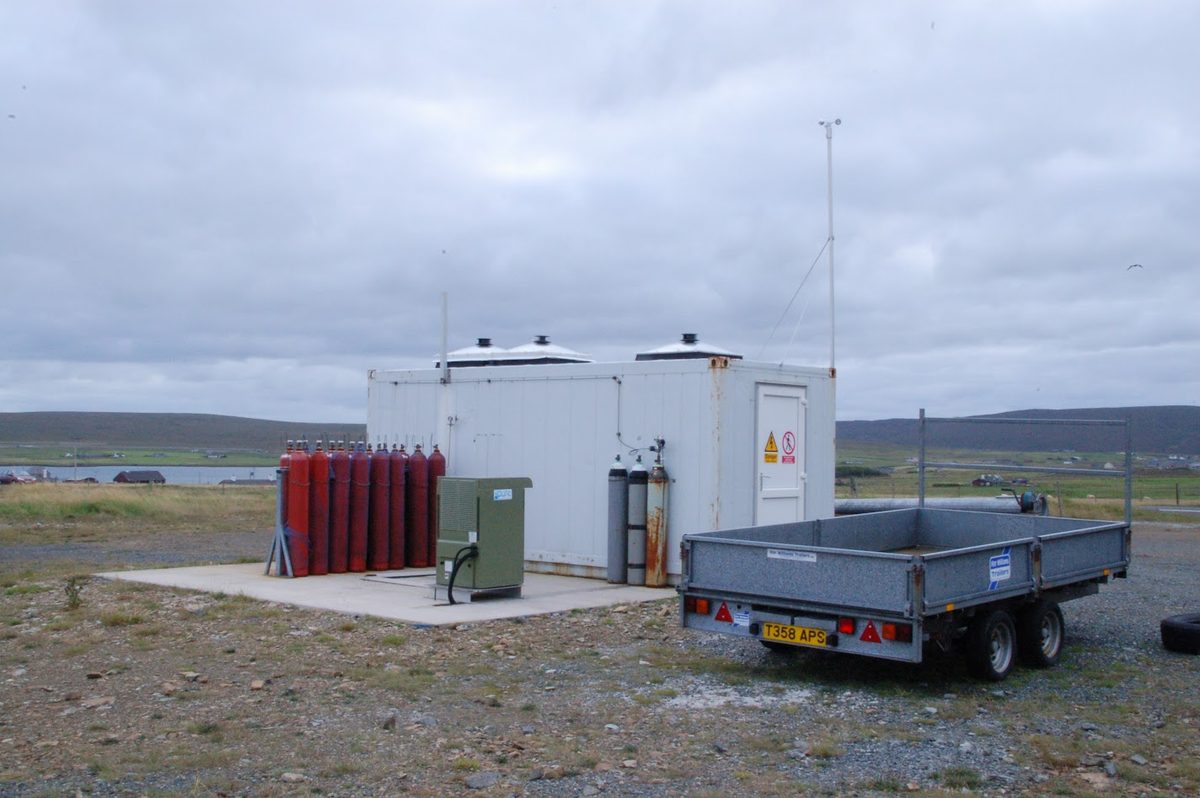
PURE Energy Centre, ShetlandThe whole hydrogen site on open moorland: containers, cylinders and trailer. The plant is the exhibit.
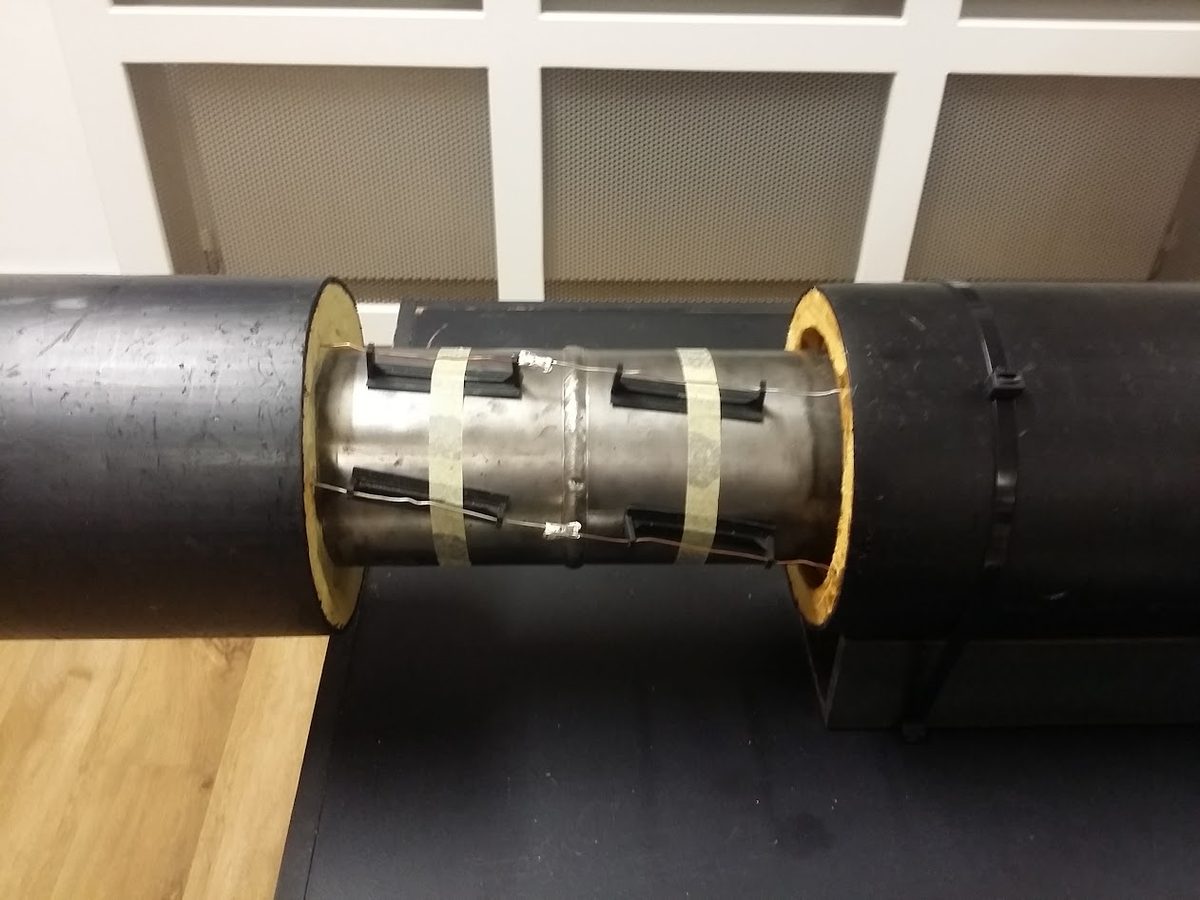
Olympic Park Energy Centre, StratfordA cut-away pipe joint showing the insulation that keeps the heat in.
Materials and recycling
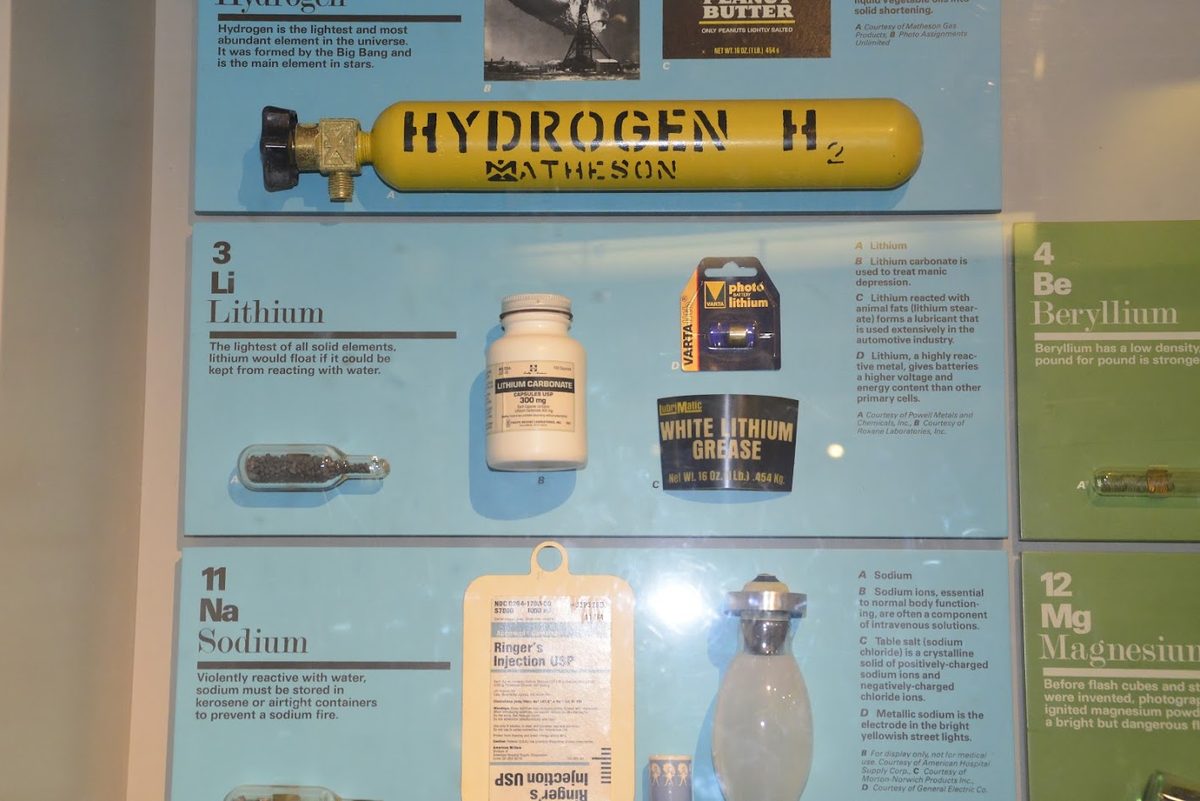
Museum of Science and Industry, ChicagoHydrogen, lithium and sodium as real cylinders, jars and products in a periodic wall.
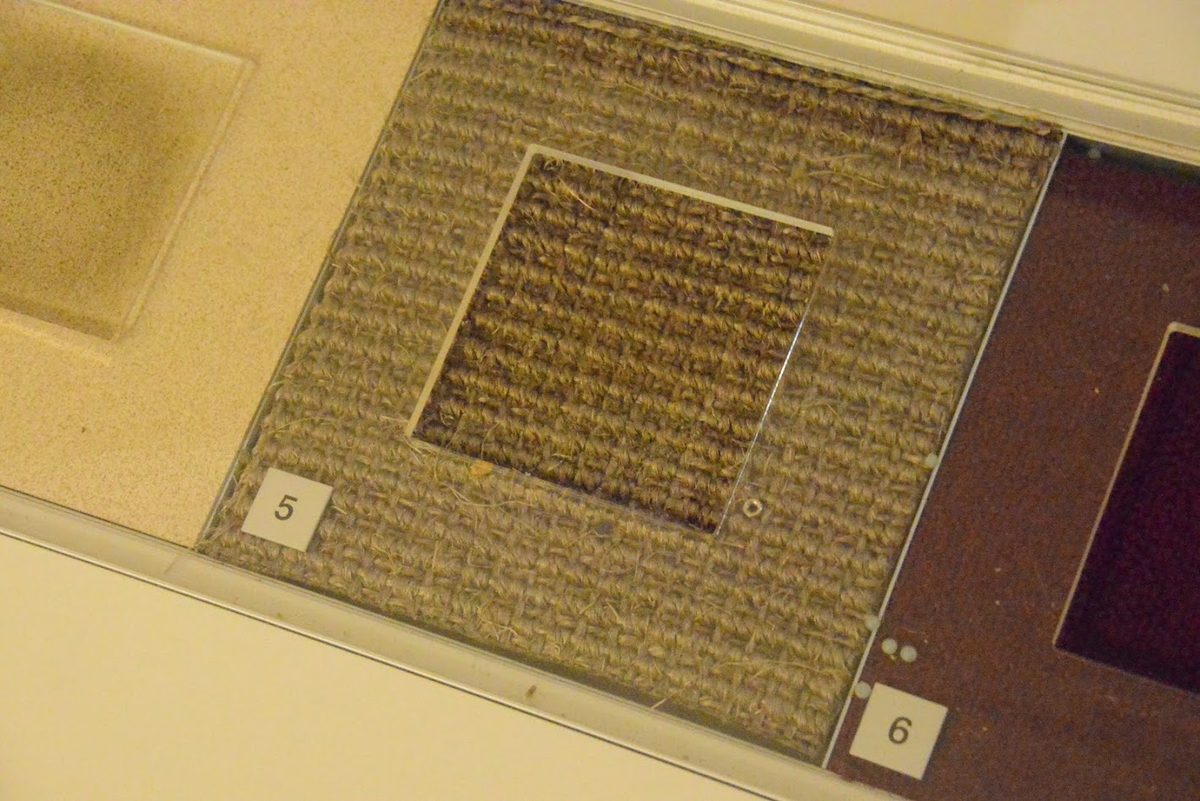
Powerhouse Museum, SydneyNumbered recycled flooring samples, from old tyres to wine corks, in a touchable panel.
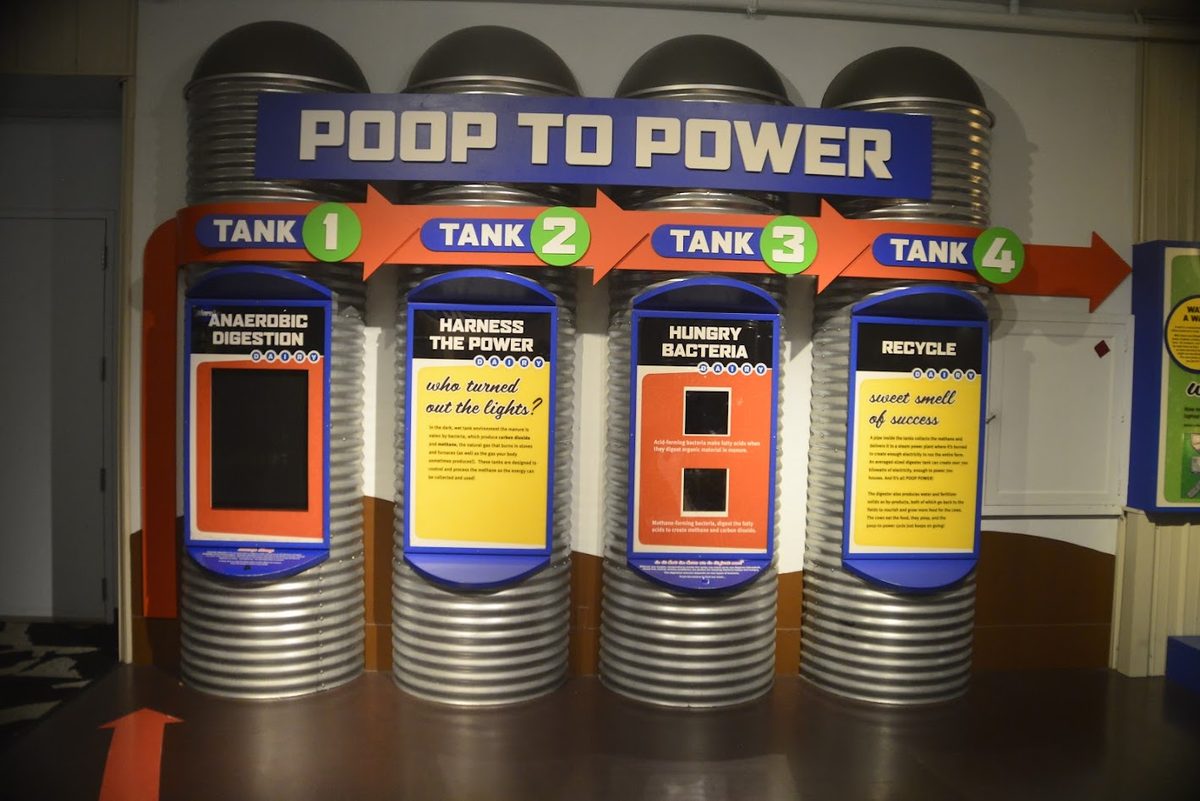
Museum of Science and Industry, Chicago"Poop to Power": four tanks that walk visitors through anaerobic digestion step by step.
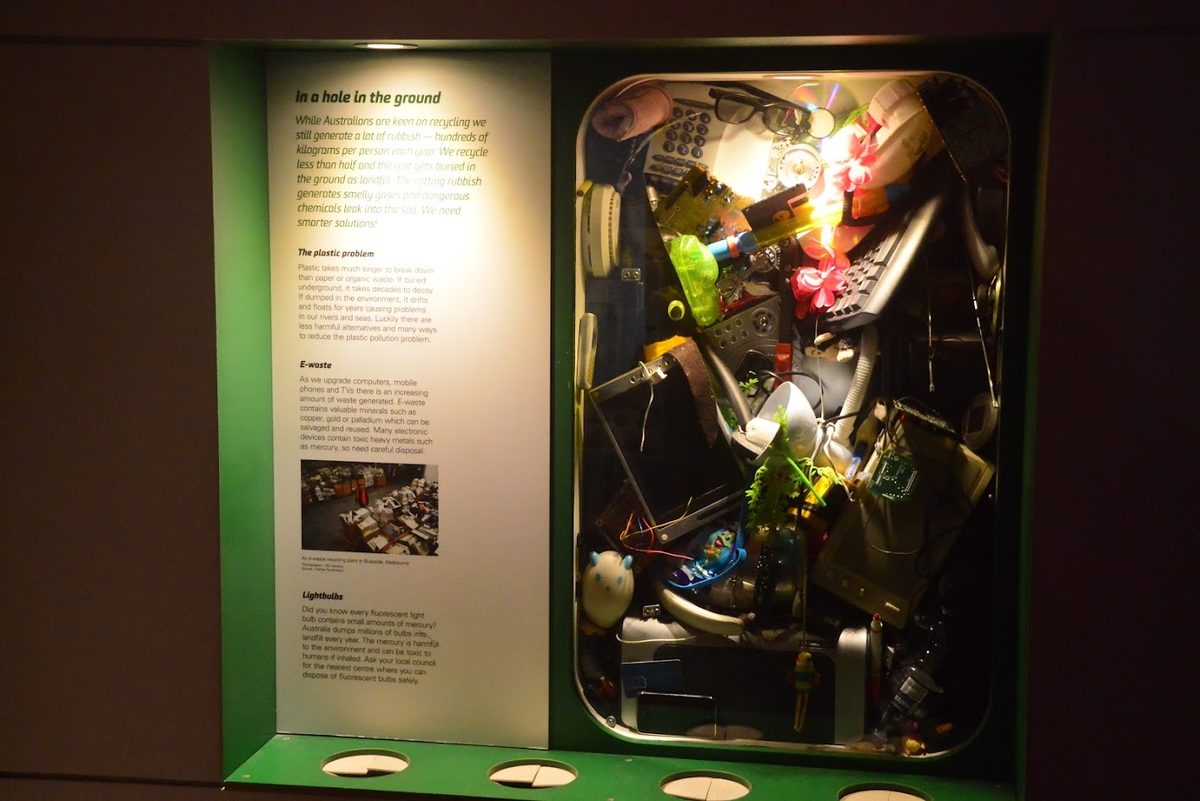
Scienceworks, MelbourneA landfill in cross-section behind glass: the rubbish shown, not described.
Hands-on interactives
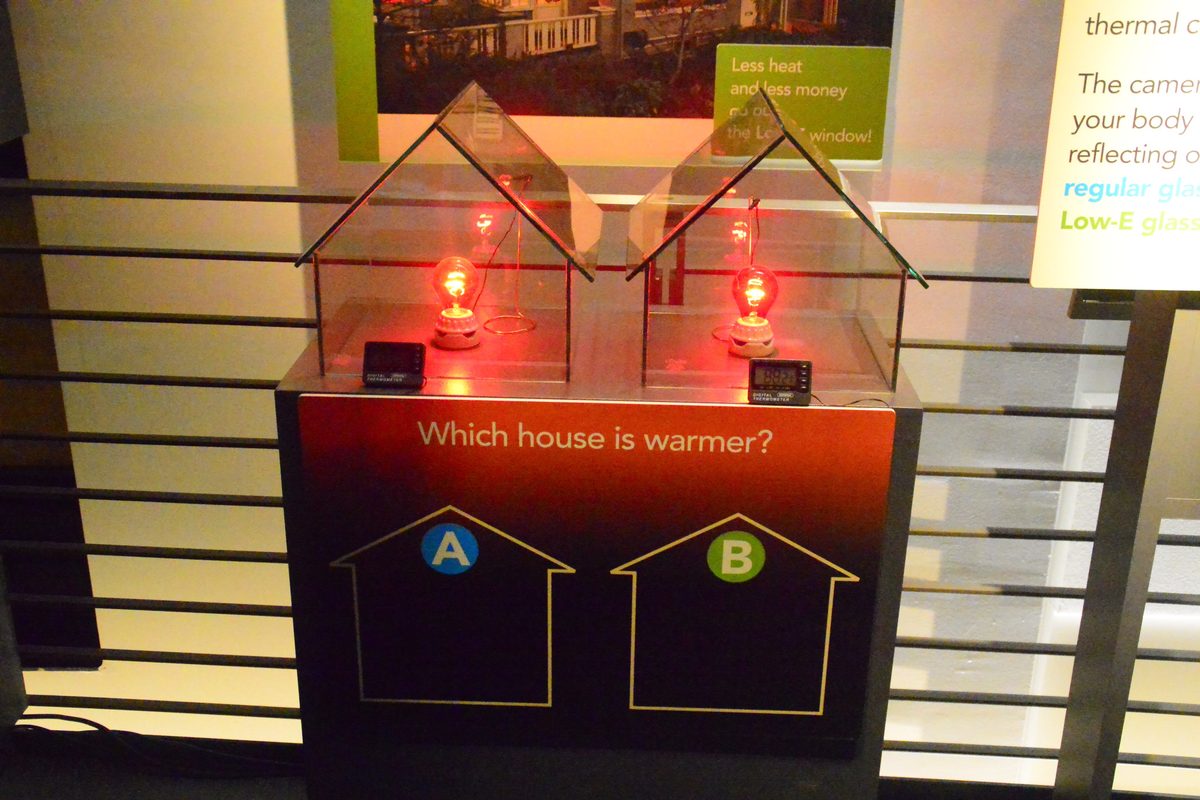
Corning Museum of Glass"Which house is warmer?" asks visitors to compare two model houses before giving the answer.
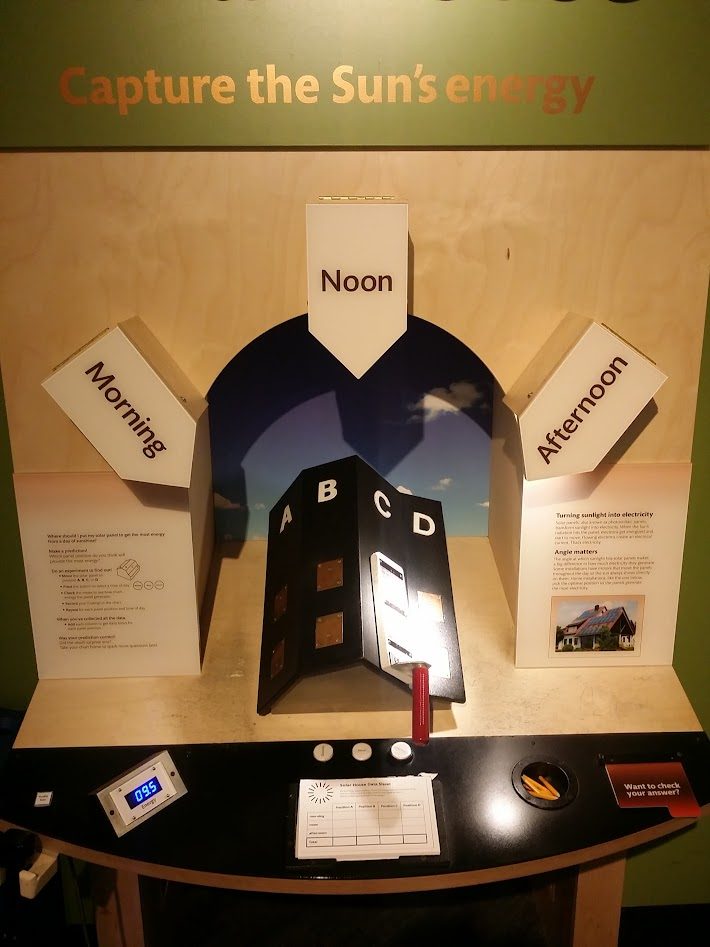
Museum of Science, Boston"Capture the Sun's energy": move a panel through morning, noon and afternoon and record what you get.
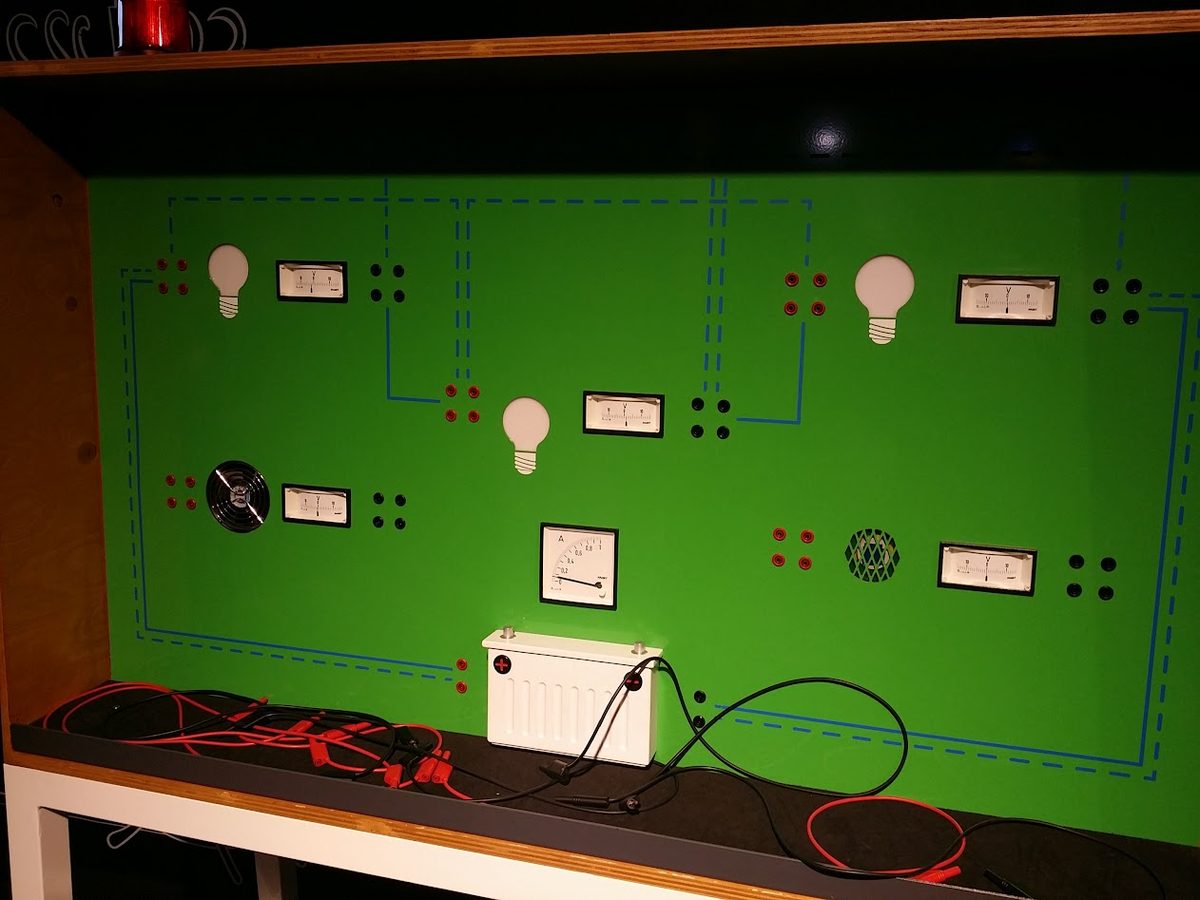
Technopolis"Wanted: electrician": a real circuit board with leads, lamps and meters to connect.
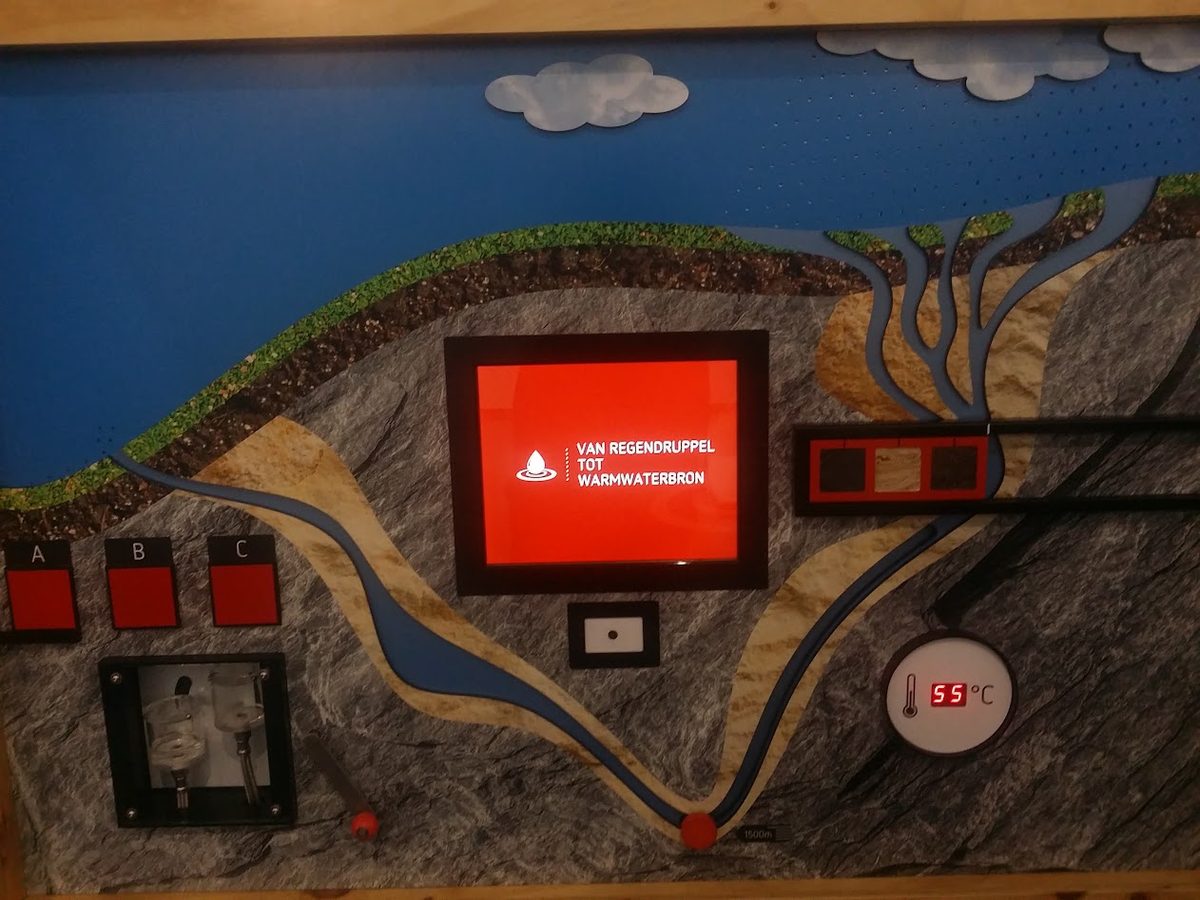
TechnopolisA geothermal interactive: heat from underground made into a press-and-see wall.
Objects you can walk round
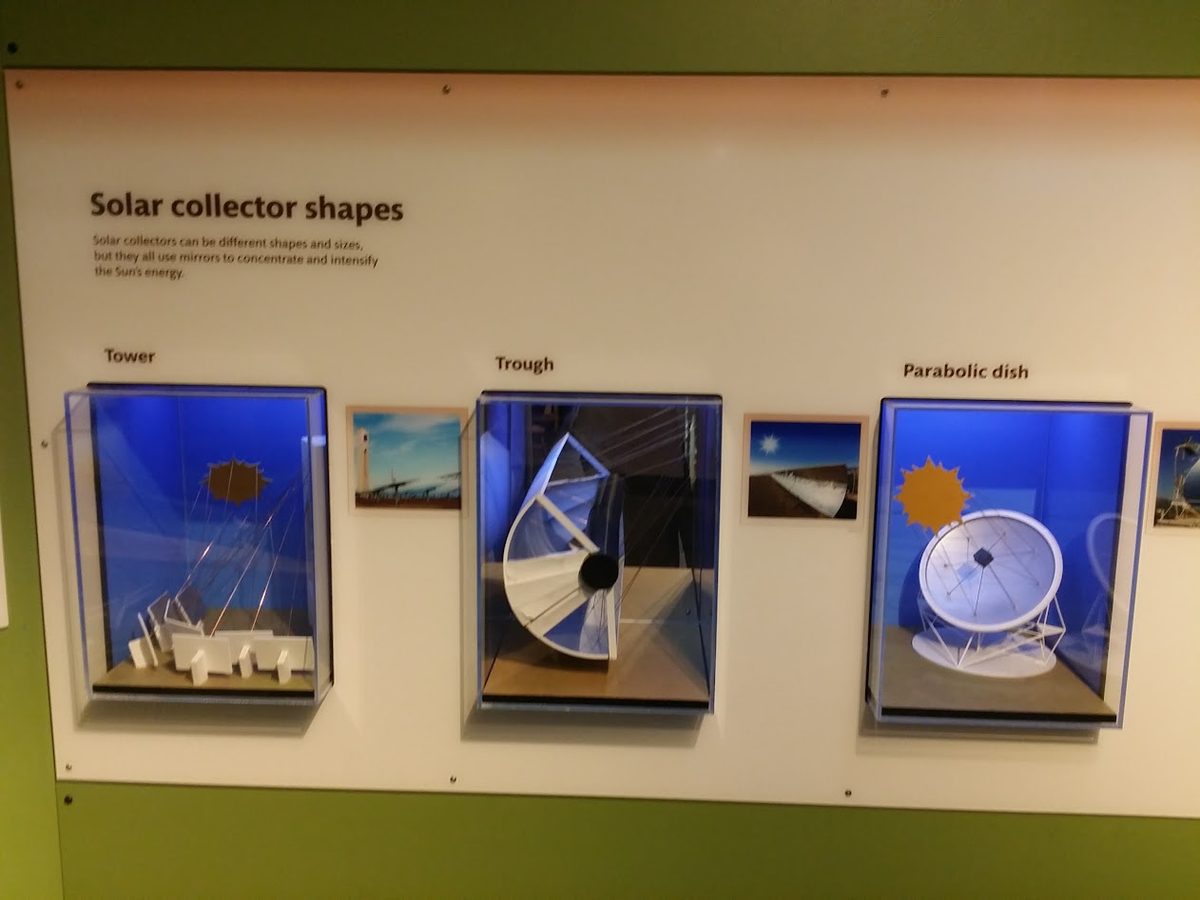
Museum of Science, BostonTower, trough and dish: three ways to concentrate sunlight, set side by side as models.
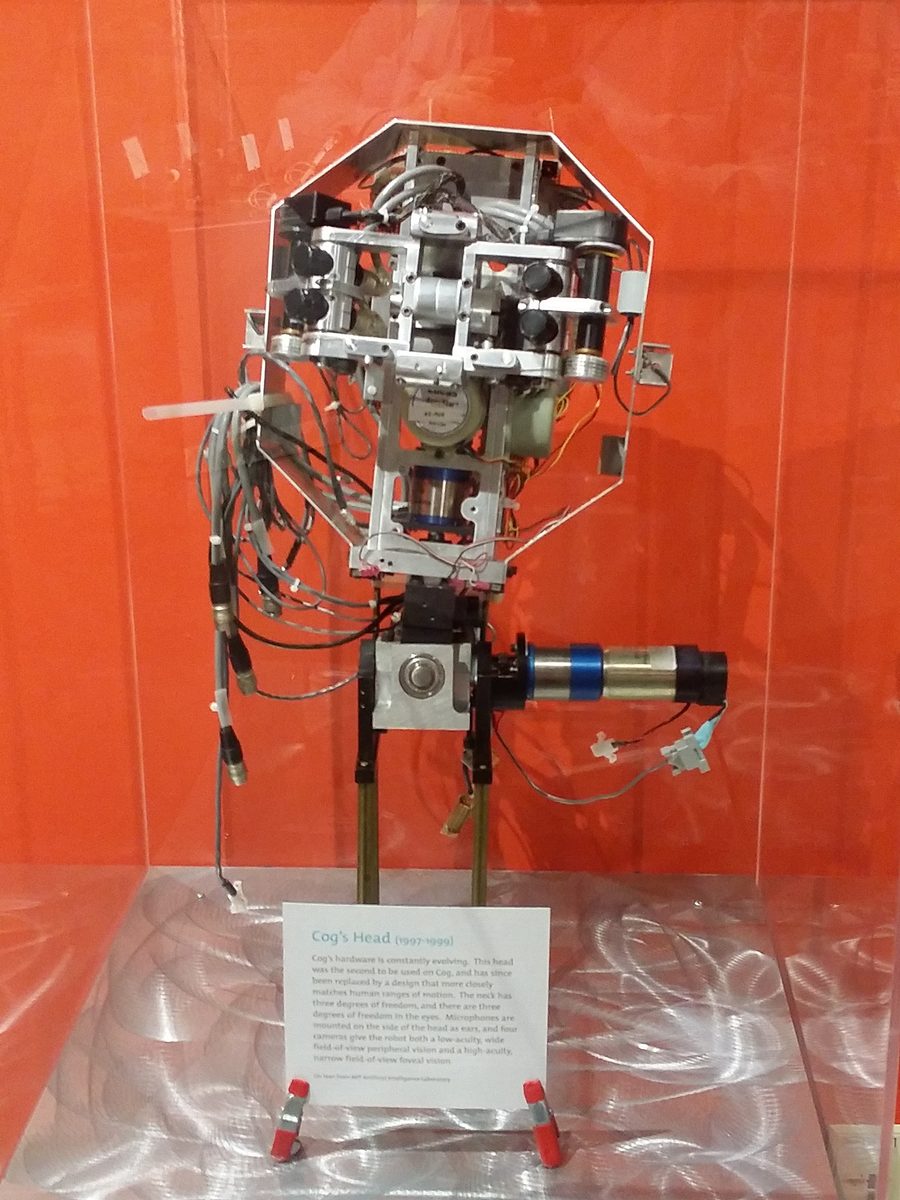
MIT Museum, Cambridge MAA robot head with the engineering left bare.
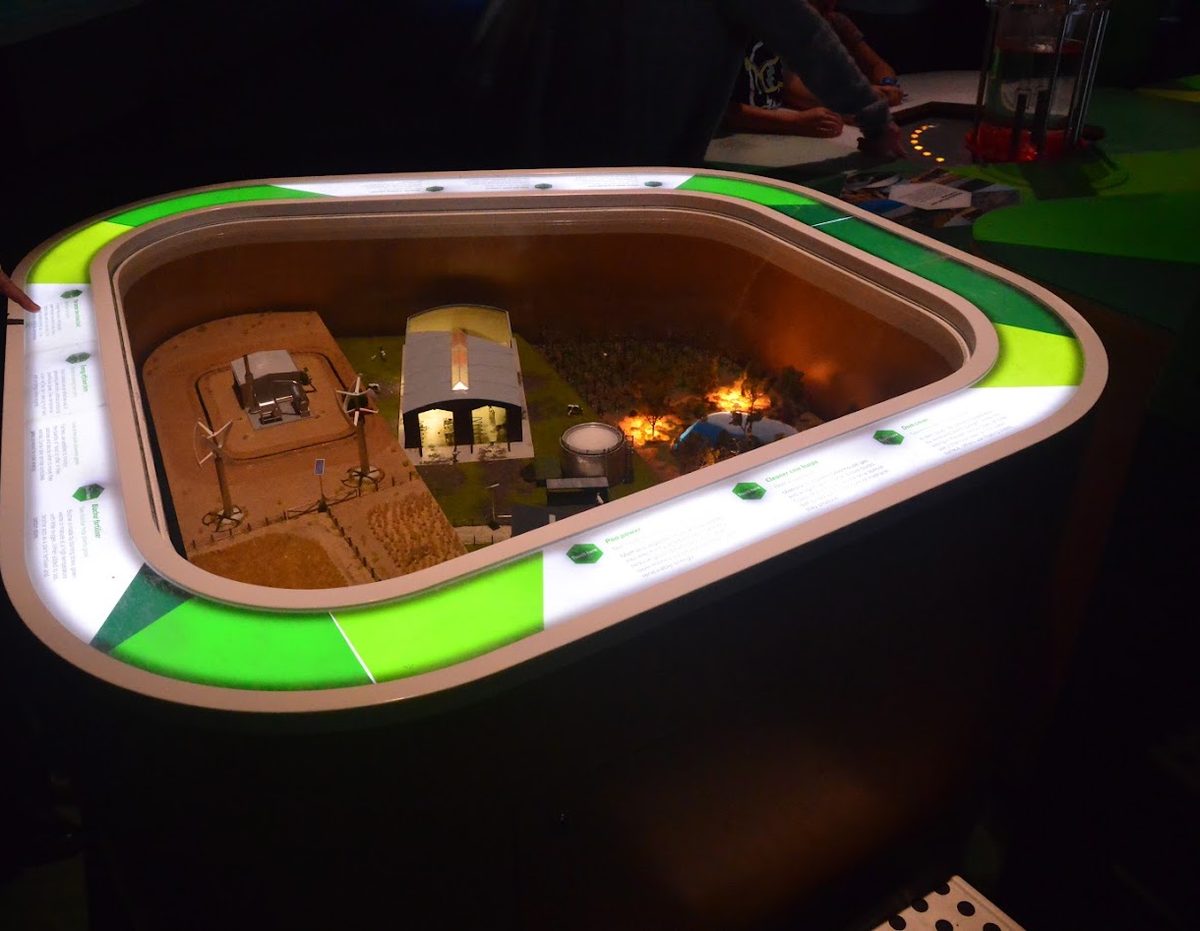
Scienceworks, MelbourneA whole farm landscape in miniature, lit from within a table.
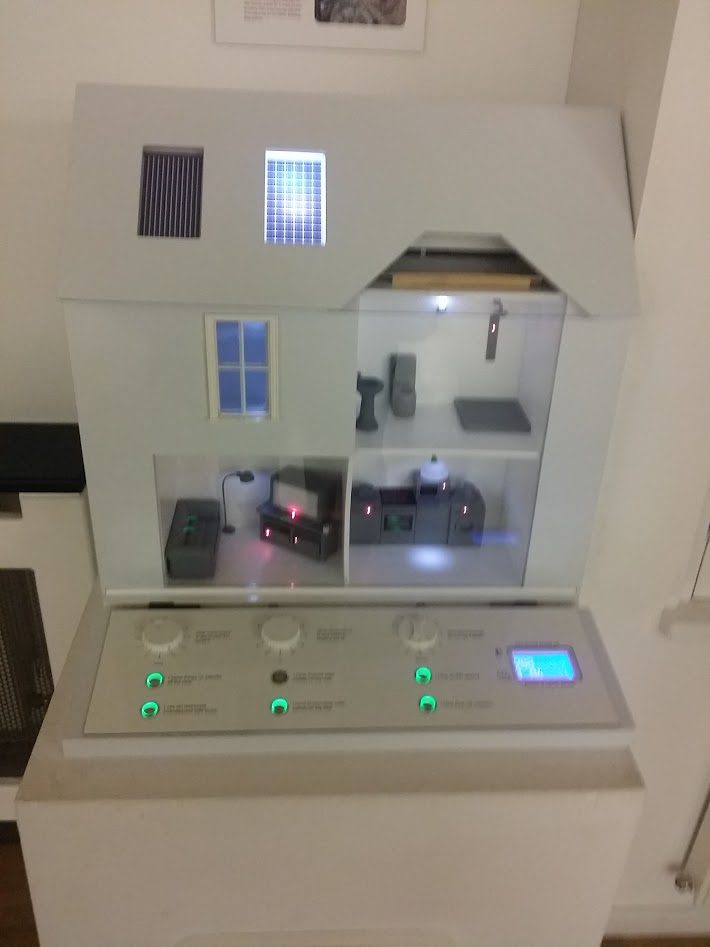
Olympic Park Energy Centre, StratfordA model house with dials, so visitors see what each choice does to a home's energy use.
The buildings themselves
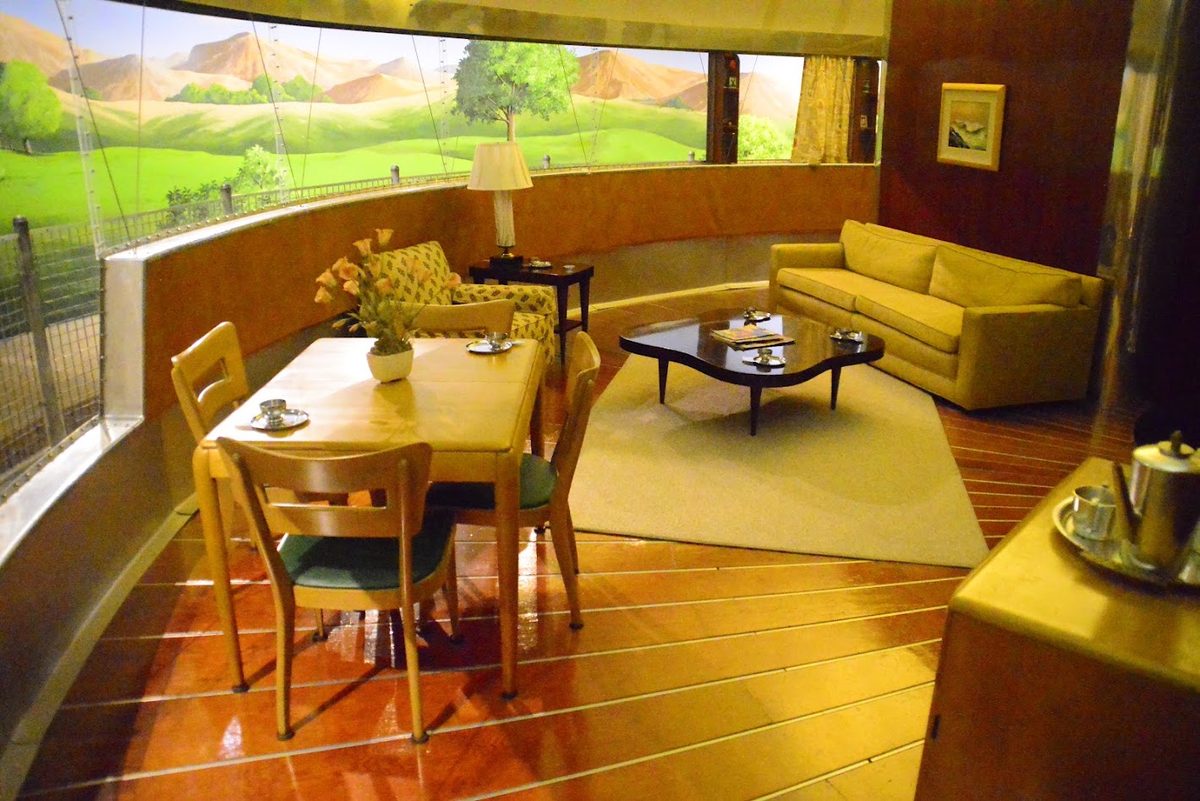
The Henry Ford, DearbornThe Dymaxion House living room, furnished as if someone had just stepped out.
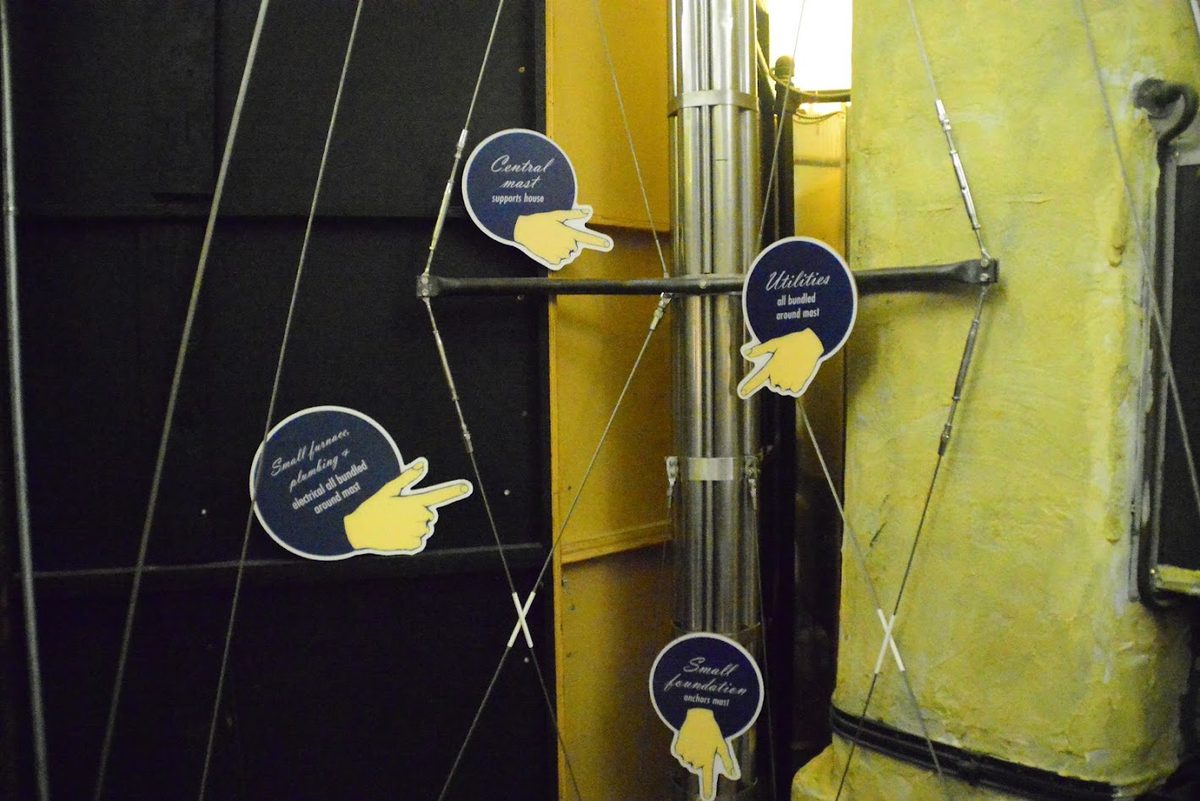
The Henry Ford, DearbornA cut-away Dymaxion House wall, with pointing labels on each layer.
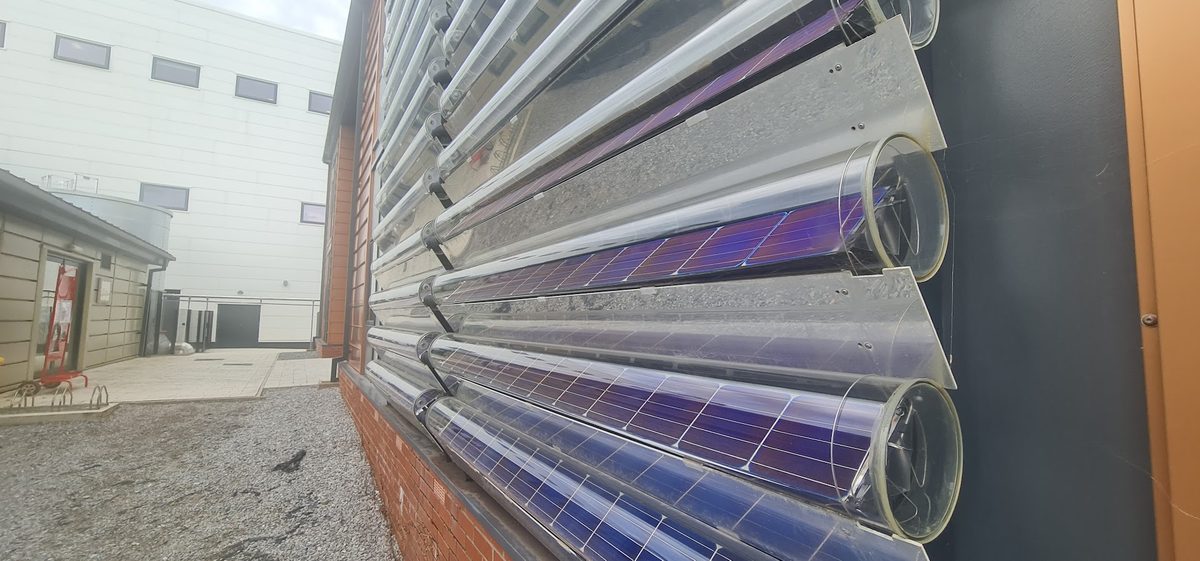
SPECIFIC, SwanseaA building whose skin is the experiment: solar collectors built into the facade.
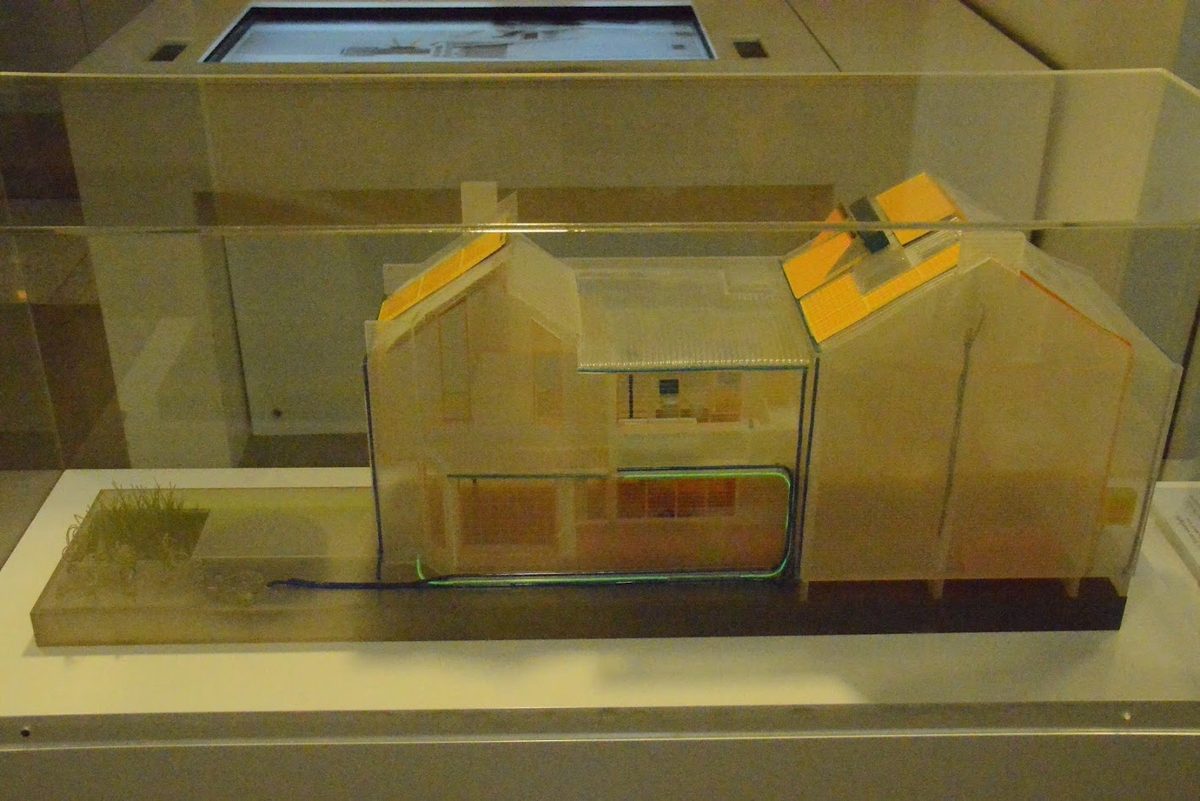
Powerhouse Museum, SydneyA cut-open model of a sustainable house: the building as the teaching aid.